The Umbel Health Journal is an evolving space for sharing thoughts, feelings, and resources about health. These may range from scientific studies to beautiful works of art - aiming to educate and expand the definition of what is healing. Scroll to discover.
PCOS becomes PMOS
This month, I wanted to share news from the medical world that I know impacts many of my clients. On May 12, a landmark global consensus study was published in The Lancet, renaming Polycystic Ovary Syndrome (PCOS) to Polyendocrine Metabolic Ovarian Syndrome (PMOS). This effort took over 10 years, involved 56 medical, academic, and patient advocacy organizations, and surveyed over 14,000 patients with PCOS as well as clinicians and researchers worldwide.
PCOS/PMOS affects 1 in 8 women (170+ million)— it is a COMMON condition diagnosed by the Rotterdam Criteria, the presence of at least 2 of 3 symptoms:
Ovulatory dysfunction (irregular or absent menstrual cycles)
Hyperandrogenism (jawline acne/hair loss on scalp clinically, high T or other androgens on bloodwork)
Polycystic ovarian morphology on ultrasound (high follicle count)
A rose by any other name ... etc but in this case, the name change is significant because it reflects the broader issues of misdiagnosis and delayed research in women’s health.
PCOS is strongly linked to metabolic dysfunction. It is associated with insulin resistance, so the emphasis on ovarian health in its name creates the idea of it being primarily a sex-hormone issue — when in fact it is spans the endocrine, metabolic, and ovarian.
The reason so many people with PCOS seek naturopathic care is because we understand this full picture, and also that this presents differently in everyone. An individualized approach to a patient’s specific presentation is really important! Some clients are insulin resistant, have dysglycemia, liver disease, inflammation. Others have acne, hair loss, oily skin. Many are concerned about fertility as their cycles are irregular. Others are plagued with fatigue, anxiety, depression. PCOS has multisystem health impacts. The single most common “treatment” in conventional medicine is birth control pills, which mask ovulatory dysfunction (stopping it altogether, actually) and don’t directly address metabolic health or many of the other symptoms people struggle with.
Historically, medical research has underfunded and underprioritized conditions affecting women. This recognition of a metabolic component in such a HUGE group of women creates space for more conversations about things like blood sugar regulation, stress + sleep, inflammation, environmental exposures and endocrine disruptors, proper exercise, nutrition and processed foods, and chronic nervous system dysregulation — how do these factors shape women’s health? And does PMOS mirror the broader metabolic health crisis in America?
A naturopathic approach helps restore communication within the body. It may include nutrition therapy, strength training, sleep restoration, targeted supplementation, and herbal or energetic inputs. Gut flora mediates metabolic and hormonal processes, so I believe that addressing GI dysfunction or dysbiosis is another important aspect of care. For some patients, medication through their primary care doctor may be a helpful and important tool too.
I know there is a lot to unpack here— if any of the above resonates with you, it’s a great time to schedule an appointment.
Take care!
Health through the holidays
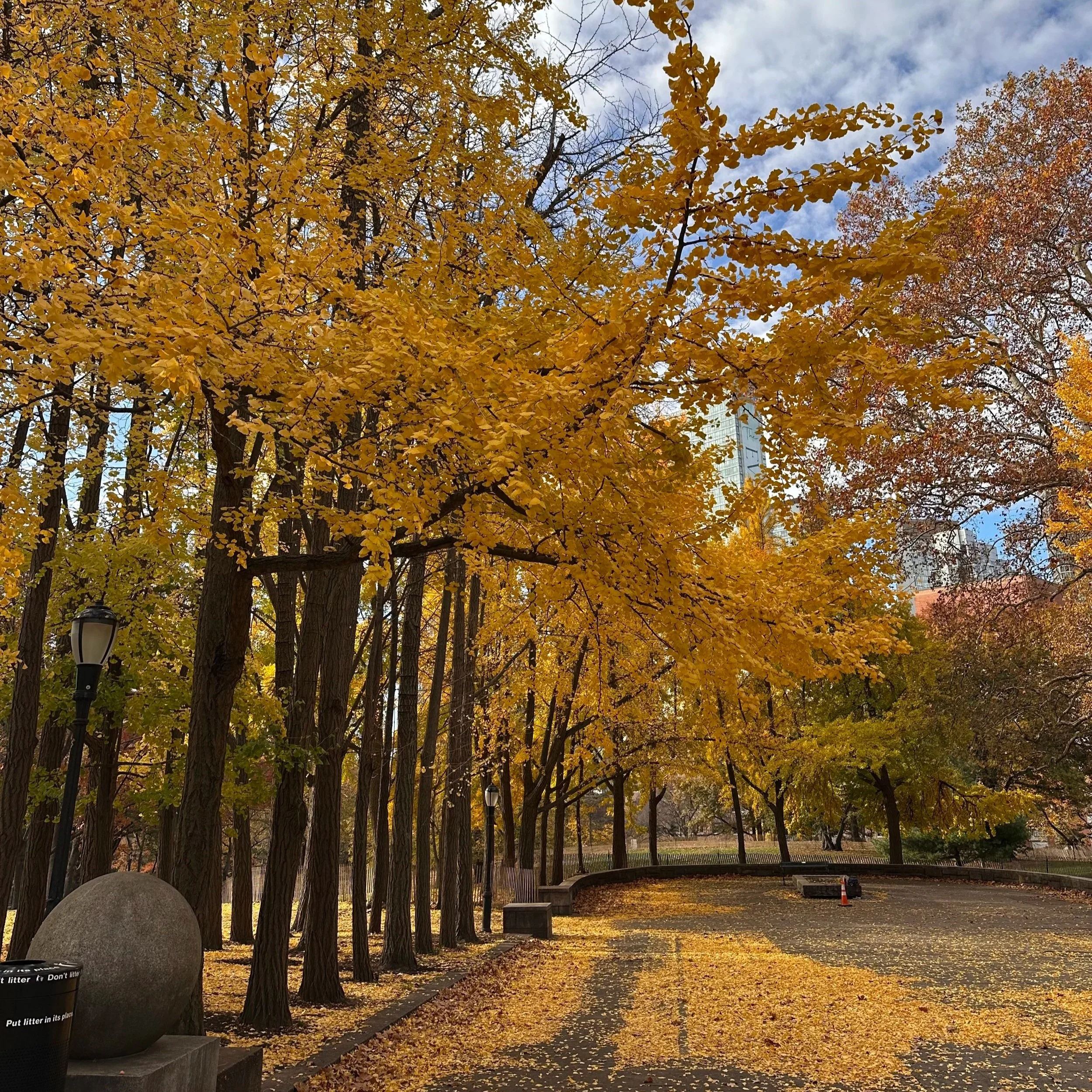
Four times a year, we’re greeted with an equinox or a solstice demarking the official shift in seasons. As a naturopathic doctor, I think a lot about how these changes show up in our bodies, in our foods, and how to guide my patients to recognize health flares and make adjustments that serve them best.
What’s unique about the fall-to-winter transition, though, is that it is hidden in the stretch of year we call “the holidays” – a joyous month-or-so that often dumps people into the new year feeling hungover, blood sugar crashing, maybe traumatized by another post-election family meal. And so beyond recommending seasonal veggies, I’m also talking a lot about how to stay healthy and feeling well without compromising on revelry. Because social gathering is, in my professional opinion, a huge tenet of health in itself. Below I’ve shared a few tips for supporting our bodies as the weather drops, and as the holiday season begins next week.
Supporting our bodies as the season shifts
Eat WARM, mineral-rich foods to nourish and ground: It’s soup season! Warm cooked foods should be priortized over cold, raw this time of year. Think soups and stews, seasonal root vegetables like squash and sweet potatoes, and warming herbs like ginger and cardamom. Adding sea salt, seaweed, or miso to your dishes also provide minerals and hydration in this often dry time of year.
Support your circadian rhythm: Melatonin, our beloved sleep hormone, loves evening darkness and morning sunshine. As the days shorten, we’ll help encourage melatonin’s endogenous production at night by getting sunshine on the face within thirty minutes of waking. I especially recommend this for my patients who work-from-home, and might not get out until later in the day (or at all!). Morning light (no screens, no sunglasses) will give us energy for the day and better sleep at night. Before bed, keep lights dim and reduce screen time. Lean into being warm and cozy at home.
Support circulation: Cold weather constricts, and most of us naturally become less active too. This is okay! But keeping an intentional movement routine in a season when we may be outdoors less is important – think brisk walks, yoga, and stretching. Hot water bottles and sauna also help circulate blood and lymph. Warm herbal teas like ginger, cinnamon, and tulsi help keep us warm and hydrated too.
Support your immune system: It’s cold and flu season – kids are back to school, holiday indulgences might weaken our defenses (more on this below), and we could all use a little extra support. Most New Yorkers have low Vitamin D levels – get these checked and consider vitamin D, a high quality omega-3, and elderberry syrup as supplements to your healthy diet through the winter.
Healing through the holidays
Make a dish: It is a big season for eating, which is a beautiful thing. I recommend bringing a healthy dish to the function. Every year for Thanksigivng, I volunteer to make a vegetable side. I know I will feel better if at least half my plate is veggies, so I make salads, roast brussel sprouts, sautee green beans — whatever sounds good that year, is crunchy, is GREEN. It is simple and appreciated by all, and can bring food-levity to a notoriously heavy meal. You can do this too- invite people to join your healthy moment at any holiday function.
Eat at home between the holidays: With holiday travel and irregular schedules, it’s easy to fall off routines and start ordering out a lot. But I would argue that finding grounding practices in between events is extra important this time of year. Keep it simple – I recommend keeping eggs and yogurt stocked, so you always have a high-protein breakfast, meal prepping a big soup (this “Feel Better Chicken Soup” is my favorite to fall back on), and have your fridge and pantry stocked with nutrient-dense snacks like olives, organic turkey slices, arugula and lemon for salads, nuts and seeds.
Drink Less: In many ways, it is easier than ever to drink less. By easier I mean: more socially acceptable, more NA options available, and less part of the status-quo. In a season where the tendency is to drink more, this can be extremely helpful to keep in mind. My patients report less IBS flares, less painful periods, and fewer acne flares when they reduce alcohol consumption. Reducing alcohol directly reduces inflammation.
End on a high note: On the other side of the Holiday Season is the Resolution Season. It is always one of the busiest times in my practice, and I resonate with and respect the spirit of goal-setting in January. That said, I’d love to invite you to explore ending the year on a high note. Perhaps the opposite of hungover, blood-sugar crashing, and traumatized is hydrated, nourished, and resilient? I have a feeling we can all benefit from feeling this way in 2026.
PMS + Holistic Psychotherapy
GUEST PRACTITONER: Thanks to Brooklyn-Based holistic psychotherapist, Julie Goldberg, for contributing to our Journal! Julie is the founder of Third Nature Therapy in Brooklyn, NY - learn more about their offerings and book a session here.
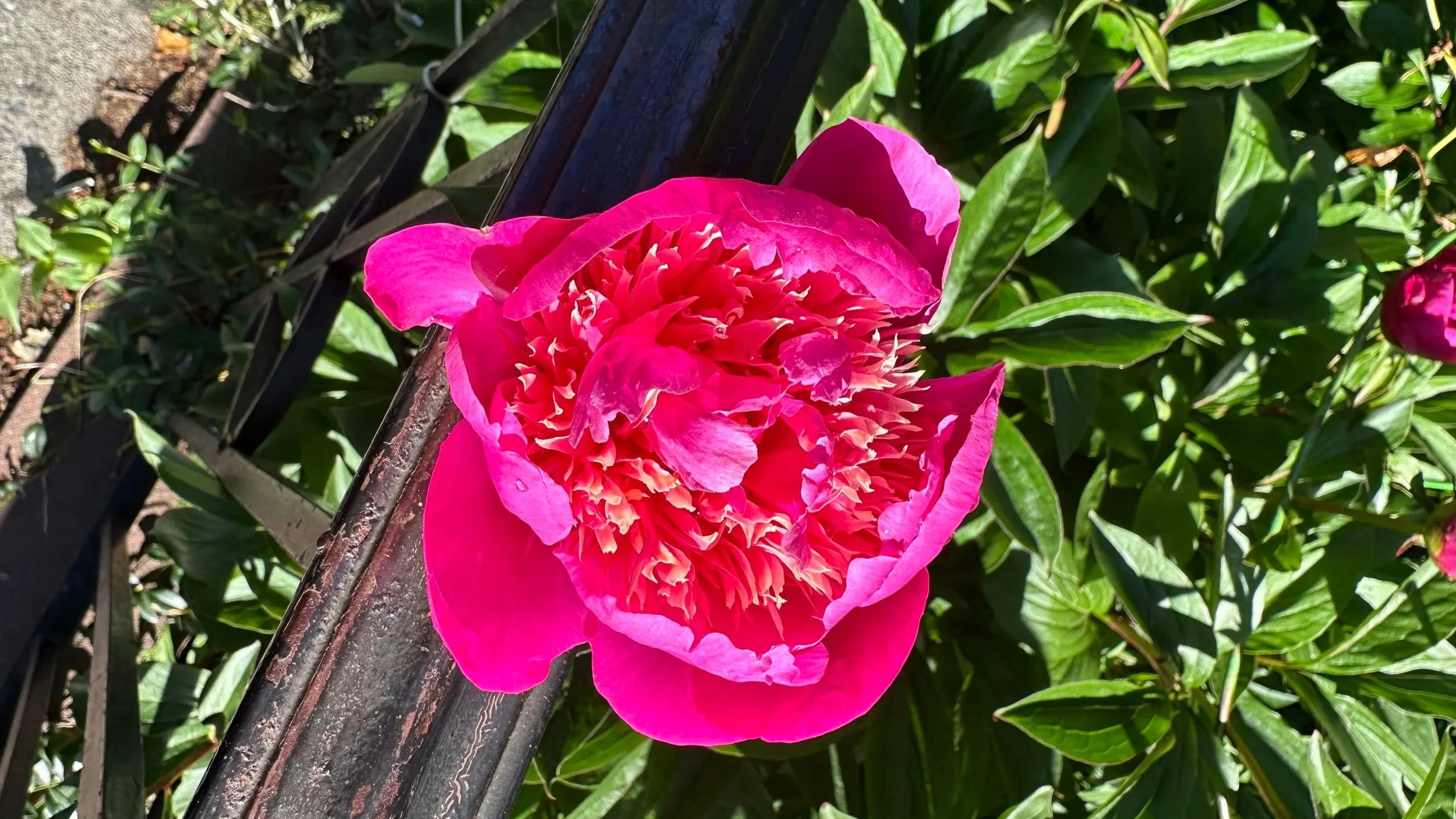
As a therapist, I usually begin my sessions by simply asking “How are you?”. Many of my female clients often answer, half joking, ‘I’m PMS’ing and losing my mind’—as if this is simply part of life.
While PMS is common, feeling extreme mood swings, hopelessness, and/or pain every month is not something you have to accept as your ‘normal.’ Because hormones influence everything from mood and energy to sleep and concentration, untreated imbalances can often show up as emotional struggles—what feels like ‘just PMS’ may actually be your body’s way of asking for deeper support.
When clients describe intense PMS symptoms, I first encourage them to connect with a medical professional to seek support for what their body is communicating to them. A gynecologist, acupuncturist, naturopath, endocrinologist, and internal medicine doctor are all great options to get the care they need.
In the process of seeking medical support, we work together to build coping skills to help manage some of the symptoms.
Below are three of my most used support tools for helping clients manage PMS:
Noticing The Symptoms Without Becoming the Symptom
Begin to track your cycle and learn when and how your PMS symptoms show up. As things start to arise, learn to separate from the experience without becoming the experience. This might look like noticing and saying to yourself, “A part of me is overwhelmed right now” rather than “I am overwhelmed.”
Begin to create distance from the symptoms so you can witness them, rather than become them. Instead of blaming yourself for being “moody” or “too sensitive,” you can start to understand that your body is following a rhythm that you can begin to witness and support.
Make Space for What You Really Need
As you begin to track and learn more about your symptoms, can you build a relationship with your body and hormones that lets them know you are listening?
What does your body need during PMS or while you are menstruating?
Can you learn to listen and care for yourself in ways that signal to your body that you love it and want to care for it?
This might look like clearing social plans and turning inward on days your body needs more attention. Or the opposite, seeking out social plans and planning something fun when you know your spirits might need a lift.
Let go of what you think you “should” be doing and begin to turn inward, learning to build a unique relationship with your symptoms and body rather than resisting them.
Find Balance Between Pain and Pleasure
Pendulation is a somatic tool used to notice and be with the physical experiences of both pain and ease. It involves moving back and forth between sensations of safety and discomfort.
As you notice tension or cramping in the body, gently shift your attention to a place in your body that feels more open or at ease. If nowhere in your body feels at ease, find a plant, a painting, a visual, or something similar in your environment to rest your attention on.
Intentionally give your mind a break from the pain, resting and settling into pleasure.
Then, begin to move your awareness back and forth between pleasure and pain, resting for a few cycles of breath on each of them. This is hard work! Think of it as a mental bicep curl, which will eventually begin to give your mind a break from its natural orientation towards pain.
Your Cycle Symptoms are Messengers
If PMS symptoms show up each month and begin to interfere with your day-to-day well-being, know that there is support for you. With medical care and emotional regulation tools, it’s possible to build a more balanced relationship with your cycle.
Stanford Fermented Food Conference
Happy September! I am feeling extremely lucky to have attended the inaugural Fermented Food Conference at Stanford earlier this month. There was a consensus among attendees that it was the best conference we’d ever been to - it was incredible to be among a group of academics, chefs, food scientists, gut microbiologists, practitioners, formulators ~~ fermenters of all types, in every sense.
Speakers shared stories of their archaeologic digs to understand ancient DNA, to fermenting food waste to create a zero waste restaurant, to the importance of design in creating flavor, to the laboratory science of gut microbiology, and so much more -- it’s clear that those actively engaged in discovering best understand how little we know (but are so completely moved by the opportunity in this).
I presented a case report for the first time - on the successful eradication of a gut pathogen with herbal medicine and fermented food!! - but really my thesis is this: a dynamic approach to health (of an individual, community, landscape, planet) is the only way forward. As a naturopath, I see clearly that we live, as our host David Zilber put it to us, in a “post-pasteurian” world. Just killing off what we consider ‘bad’ is as much lazy medicine as it is bad policy— life is a multitude of terrains to be fed, nurtured, and enjoyed. That’s where health comes from.
What a relief to let your mind (and your gut) feel free!
On a more practical note, more on what I learned that you can use FOR HEALTH, below.
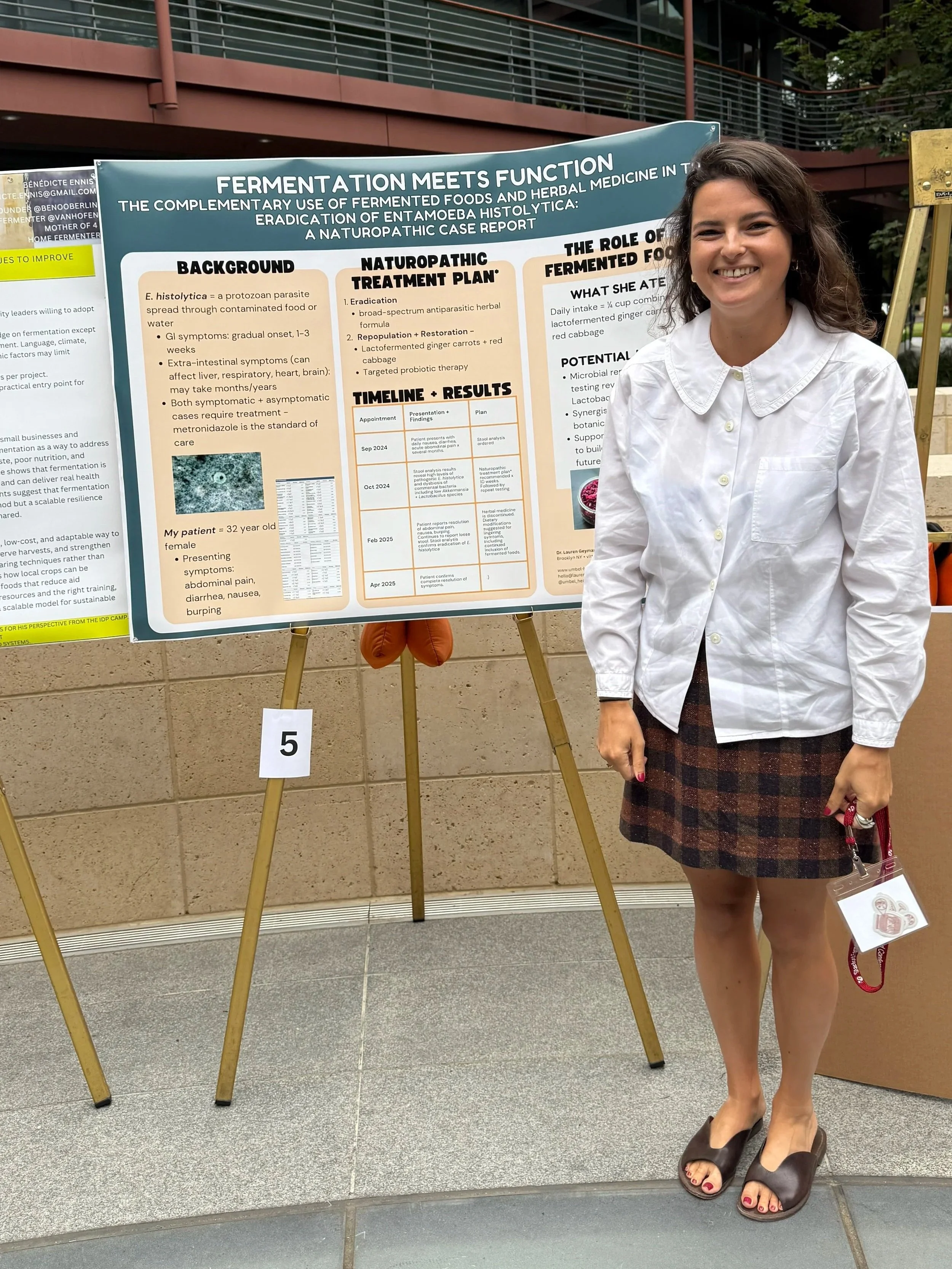
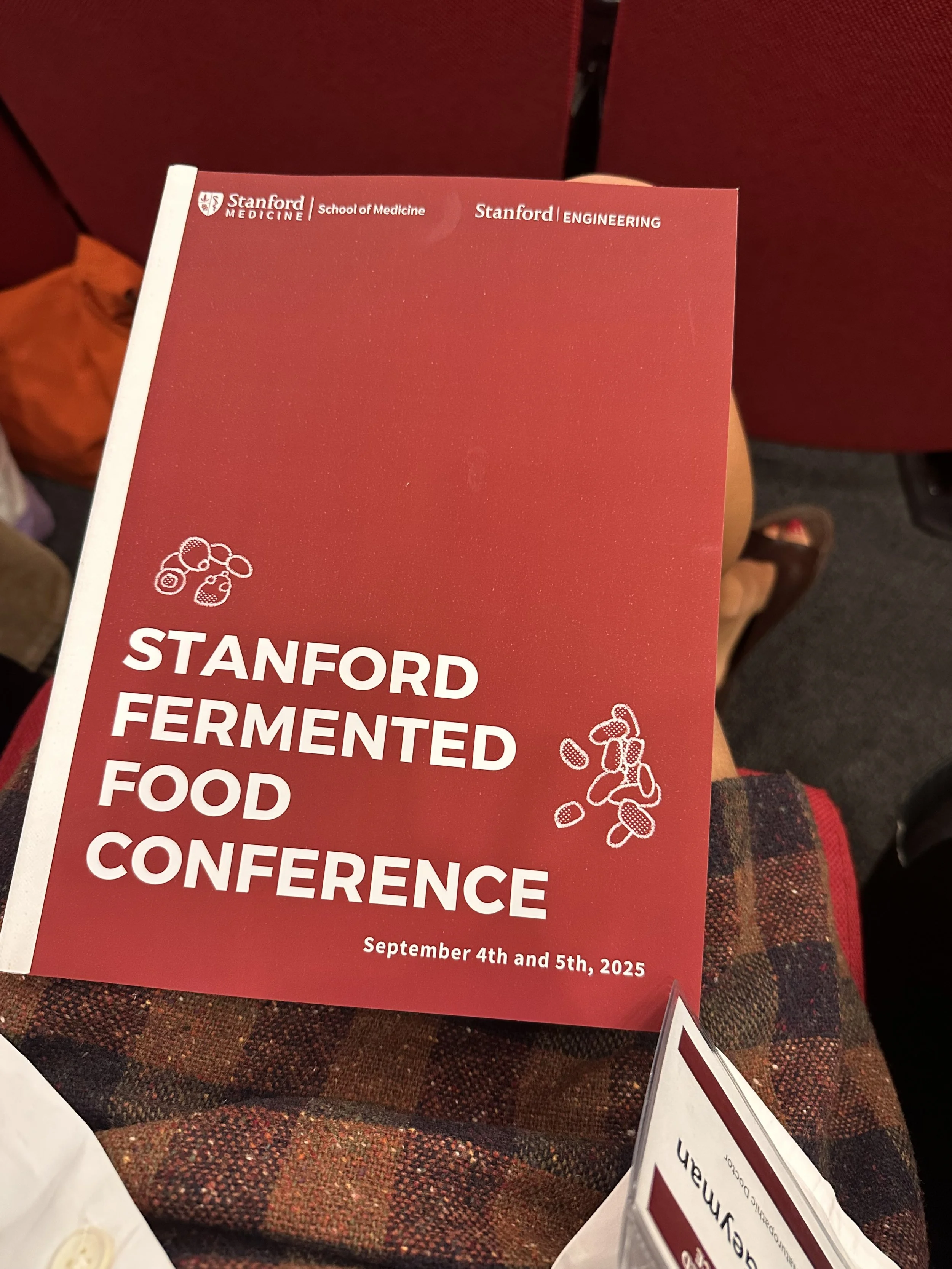
Practical tools for incorporating more health-benefiting fermented foods into your diet: resources + takeaways from the labs at Stanford
Fermented and Fiber- Rich Food Study, also called the Fe Fi Fo study :)
This study was conducted by the Sonnenburg Lab at Stanford, and compared intake of fiber to fermented food on inflammatory markers in the gut microbiome. Not surprisingly, both were extremely beneficial! Surprising to me, fermented food actually did more for us than fiber. Inflammation is a major driver of chronic disease and supporting gut diversity is, in my opinion, non-negotiable in our industrialized world.
Practical Takeaway:
Aim for 3-6 servings of fermented food per day. Some people have trouble tolerating fermented foods (I see and work with this all the time in sessions) so start slow and work your way up to your body’s tolerance. Here are some examples:
1/4 to 1/2 cup of fermented vegetables (sauerkraut, kimchi, curtido, carrots, beets, etc)
1-2 spears of pickles (naturally brined, NOT just in vinegar)
1/2 - 1 cup plain yogurt or cultured plant-based yogurt
1/2 - 1 cup kefir
4-8 oz kombucha (look out for added sugar)
1 tablespoon miso paste'
1 tablespoon fermented vinegar (like ACV “with mother”)
1-2 oz aged cheese
1 tablespoon soy sauce or tamari
1 slice naturally leavened, whole grain sourdough bread
1 piece injera
1-2 pieces dosa or idli
2 tablespoons Labneh
1/2 cup Kvass
1/2 cup -1 cup Tepache

In the midst of hard science and kitchen experiments, I felt grateful for registered dietician Dalia Perelman, who’s lecture was titled Challenges in Translating Fermented Food Science to the Marketplace. Marketing and green-washing has made shopping for healthy food increasingly difficult. While it is fun and beautiful to ferment your own food (I’m currently trying to ferment cucumbers into dill pickles on my countertop), it is not everyone’s interest and likely most of us will be purchasing some of the ferments we eat. Being an informed and mindful consumer becomes really important here. She shared this incredible chart to help us understand what on the food label actually MEANS it’s fermented food (hint: the word probiotic is not always it).
Find this chart and a lot of other great resources here: https://med.stanford.edu/nutrition/education/Resources/Fermenting-the-Facts.html
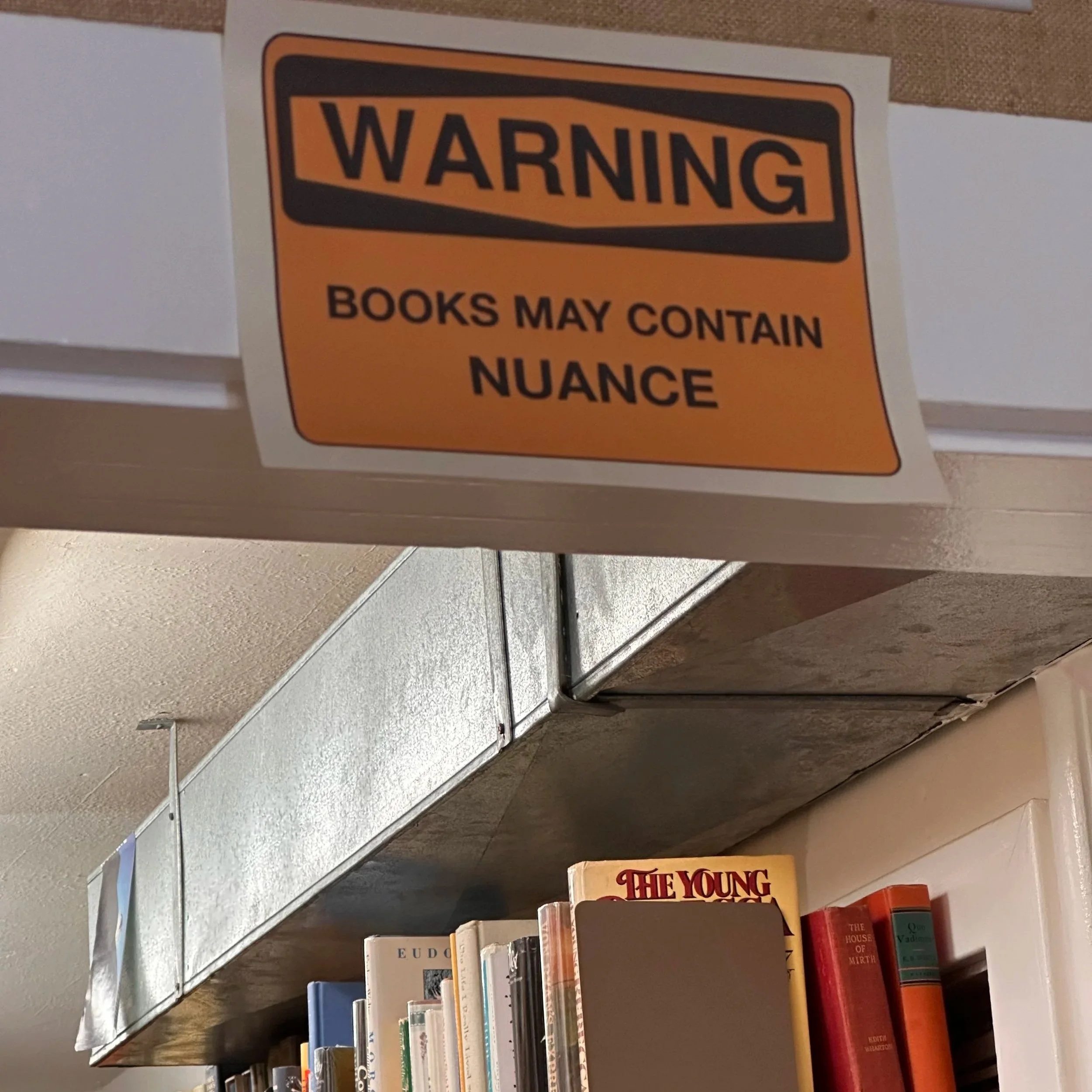
Finally, a sign I spotted at Bell’s Books in Palo Alto. Applicable to health advice too.
ANATOMY: THYMUS

Thymus vulgaris (Common Thyme)
(Source: Science Photo Gallery)
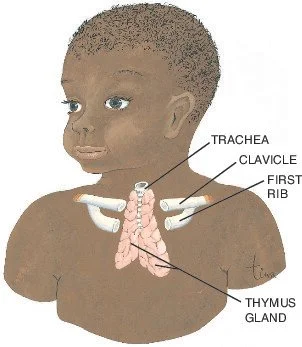
Thymus gland in a young child
(Source: Taber’s Medical Dictionary)
The name THYMUS (both plant and organ) likely stems from a shared Greek root - THUMOS - meaning courage, soul, or spirit. The role of the thymus, an immune organ, was long thought to differentiate SELF from NON-SELF, but with the better understanding and greater prevalence of autoimmune diseases (for which the thymus plays a crucial role in prevention), such differentiation is no longer tenable. A recent paper titled The thymus and science of self takes a deeper look at its development and proposed function. It is unique in its growth pattern— it is largest in infancy, and shrinks into adulthood.
The ancient Greeks used thyme medicinally for its antimicrobial and antioxidant qualities, ritualistically in ceremony, and culinarily as a common kitchen herb. Its use in cuisine and in medicine continues in the Mediterranean and beyond. I was not surprised to find a growing body of research suggesting its potential benefit in several autoimmune conditions, though most papers are preliminary and adequate studies in human subjects are so far lacking.

GUEST PRACTITIONER:
Three Quick & Easy Mindfulness Tools for Anxiety ~ by licensed therapist Julie Goldberg
In my therapy practice these days, it seems like more and more people are able to recognize that they experience anxiety. While this recognition and acknowledgment of anxiety is great, it only takes us so far if we don't have the tools to deal with the anxiety itself.
When anxiety shows up, it can be a gift, allowing us to complete tasks and operate directionally. It can help us organize, plan, and meet a deadline. Anxiety often tells us that something needs to be done.
But, sometimes, anxiety can become too intense. This usually happens when it's too focused on a future-oriented task. Instead of moving us towards completion, we might start to ignore things right in front of us and end up staying in a loop.
If you're experiencing intense anxiety and are struggling to break the thought loop, here are three mindfulness techniques to help you navigate it.
Container
When anxious, it's not productive or helpful to constantly be chewing on a problem. The best way to solve something when you feel anxious and overwhelmed is to bring your mind to a state of ease and calm. Your brain will begin to function optimally, and you'll be able to return to the distressing events when you're in a state of being with it.
One way to do this is to think of a container that you can visualize to store all of your anxiety, both physically and mentally.
I like to think of the container as “empowered disconnection.”
It can be anything you want: a box, a trash bag, a safe, a mason jar. Without overthinking, let your mind bring to the surface whatever it wants to use as a container. Now, gently imagine placing it off to the side, knowing you'll return to it soon.
Next, take a moment to scan through your body. You can imagine a small, handheld metal detector moving from your head to your toes, tracking any areas holding on to sensations, images, thoughts, or feelings from the distressing event. Take note of whatever is present. You can imagine placing a gentle pin on each distressing sensation, just labeling it and letting it know you'll return to it.
Next, bring your container back to mind and slowly move each sensation, image, feeling, and thought into your container. Take your time and move slowly. Really feel the experiences leaving your body and moving into your container.
You might imagine a collection of pins at the bottom of your container. Or even different energies, textures, and colors, just moving out of your system and into your container.
When you're ready, imagine sealing the lid of the container so it stays safe and protected. See if you want to add any special locks, duct tape, or packaging around the container to ensure it remains safe and sealed.
And once it's safe and sealed, imagine placing it in a safe spot. Knowing that it won't get opened again until YOU choose to open it. You can place it in the middle of the ocean, deep in a hole in the ground, in the woods, wherever you want.
Use this container as frequently as you need, keeping your anxiety safe and contained until you’re in a place to tend to it.
Calm Place
A calm place is a place you go to, either real or imagined, in your mind that you associate with feelings of being calm and peaceful.
To do this, think of a place, either real or imagined, that you associate with feelings of being peaceful and calm. There should be no disturbances or threats in this place, as the goal is to bring your body and mind into a state of calm and relaxation when you are feeling anxious.
Bring to mind what you see, what you hear, what you smell. Bring all of your senses into the surroundings of your calm place.
Next, imagine that you're turning up the volume on the sense of calm and letting it spread throughout your entire being.
Give your mind a keyword or a phrase to associate with these feelings of peacefulness and calm. Practice associating this peaceful place with your body's feelings of calm and relaxation.
Practice this as often as you want, and utilize it when you're feeling anxious or overwhelmed to give yourself a break from the anxious thoughts or feelings. Just say your cue word and allow your body to move towards the feelings of calm and peace.
Five Senses
Five senses meditation is all over the internet at this point. While it might seem overdone, there's a reason for its popularity.
Your senses live in the moment. They are connected to the bodily sensations in the present.
Your ability to connect with the senses while experiencing the present moment signals to your brain that you are safe and okay. Think of it this way: if there were a threat (i.e., fire, bear, intruder in your space), your senses would orient towards the threat, and you would not be able to connect with the other senses available.
Here's how you practice five senses meditation:
Look around your environment and slowly name five things you see.
Touch and feel four things around you.
Smell three things on your body or around you.
Listen to two things you hear.
Taste one thing in your mouth.
Move slowly and practice as often as you'd like!
Conclusion
A big part of managing and navigating anxiety involves finding what works uniquely for you. Try these three methods and see which one you like the best. Remember, it's not a one-size-fits-all model.
If you'd like more support navigating anxiety, I offer in-person therapy sessions in Williamsburg and online sessions for anyone in the state of New York. Navigating anxiety with more ease and tools is totally doable!

Julie Goldberg is a licensed therapist and the founder of Third Nature Therapy.
Her practice focuses on helping individuals better understand their inner world, befriend their nervous system (instead of working against it), and navigate changing relationships. She offers somatic therapy, EMDR intensives, and Ketamine-Assisted Psychotherapy in Brooklyn, NY.
ESSAY:
Where does pain come from?
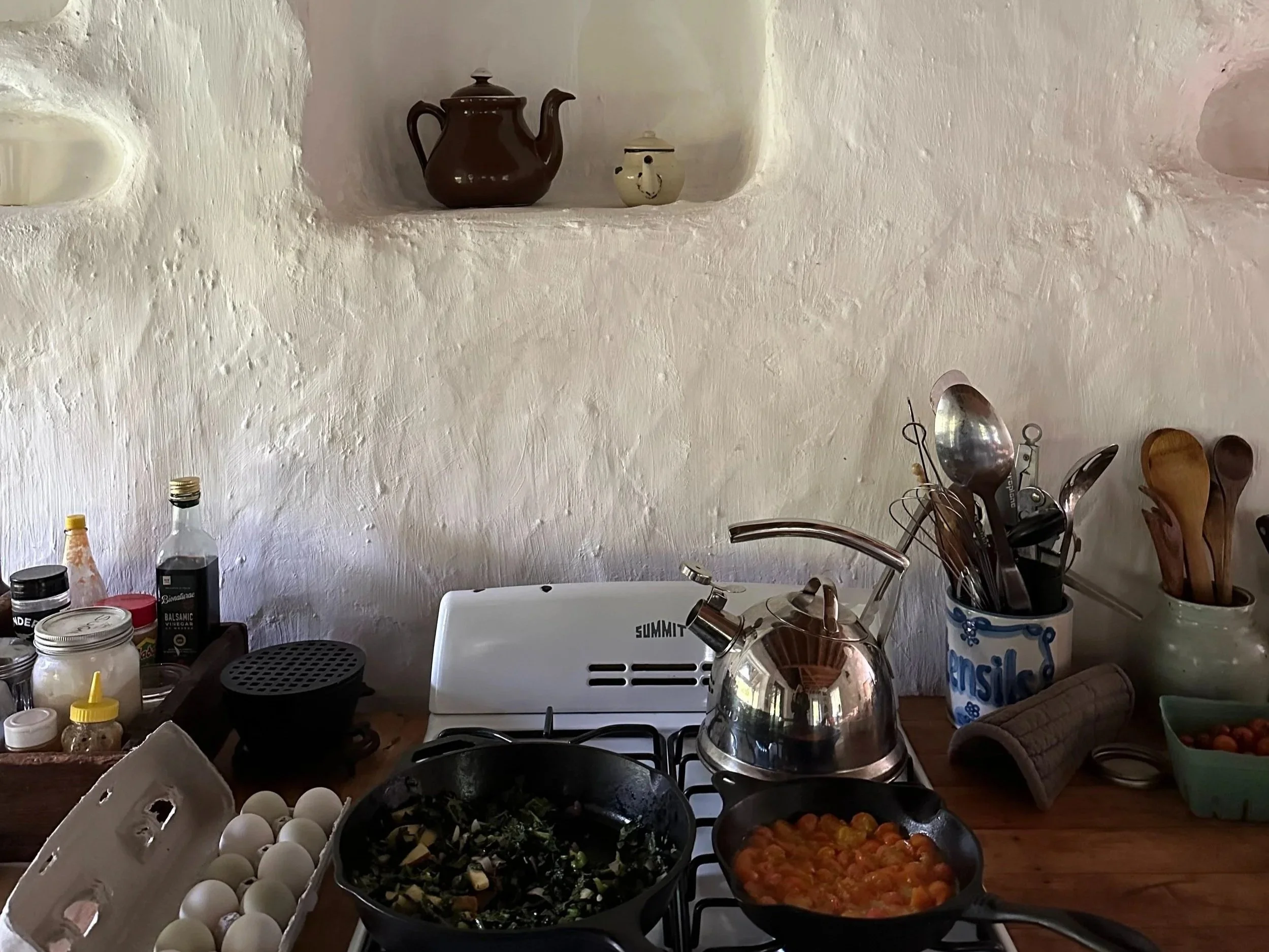
I hurt my back over the weekend. It was not that dramatic (those who heard me complain about it at the time likely disagree, hah) and it is mostly healed, but it raised this question: where does pain come from?
On Friday, I traveled to Delaware County, one of my favorite corners of the Catskills, for a wedding. It is a long drive from Brooklyn. When I arrived at my Airbnb (an adorable cottage made of straw bale), I climbed the ladder and crawled into the tiny loft bedroom to check it out. Coming down, I realized I had “tweaked” my back. It hurt a lot, I couldn’t really bend, and later that night I tossed and turned unable to find a comfortable position to sleep. I am who I am, so in the morning I drove to the health food store (shout out Good Cheap Food in Delhi) and bought Arnica tablets and Tiger Balm. I stretched in the sun, beside the goldenrod field at the cottage. By the time I was heading home on Sunday, my pain was down ~60%. I honestly chalked up the experience to a long drive coupled with “aging” (I am in my 30s?) but then I remembered something that happened the week prior.
A friend recently encouraged me to try a pretty high-intensity fitness class, which is admittedly out of character for me, but I signed up for a trial week to try it out. The instructor came over and asked if I had had an injury on my left side- he was noticing a strong favoring of my right. I mentioned a foot fracture 2 years ago and he said yes, that is it and be careful because what often comes next is back pain. I thought yes okay I will heed this warning and did a quick scan of my back — feels good, as it almost always does, it’s never really been an issue for me. The next day, I mentioned this exchange to my practitioner Damian, who was basically like .. sure .. but what is more likely to cause back pain is someone telling you you’re going to have back pain.
A week later, I had completely forgotten about all of this happening when “my back went out”. But it makes me wonder - was it the drive? An unengaged core? The ominous warning from the instructor? Some sort of vague age-related decline? Or the narrative we have been repeatedly taught, and maybe repeat to our friends and to ourselves, that aging somehow inherently causes pain?
And what healed it? The sweet sweet burn of tiger balm coupled with the seat-heat of my volkswagon was GOOD. The chiropractic visit I scheduled upon arriving back in Brooklyn left me feeling 2 inches taller. The pain seems less after each dose of Arnica. And I tell myself repeatedly that I am not a victim of back pain and that this will heal (it has).
It is a fact that the extent of pain is not correlated with extent of injury. In my practice, focused on gut health and hormones, I am often working with more visceral types of pain. I have seen patients with ZERO period pain find out they have stage 4 (the most severe) endometriosis- incidentally! I have seen patients with near-perfect stool analyses report daily stomachaches (IBS is literally defined by its visceral hypersensitivity.) In practice, I’ve seen chronic constipation cured by a job change and disordered eating habits stop by falling in love with the right person. And of course, I also see dietary changes, movement, herbs and medications change people’s lives every single day.
So back to the questions- what causes pain, what heals it? I believe it is all of the above. The root cause can be muscle strain AND the power of suggestion. The cure can be medications, healing touch, herbal medicine AND a change of perspective. Our bodies are dynamic and should be treated accordingly.
— Dr. Lauren


SCIENCE:
It all begins with an idea.
Efficacy of N-Acetylcysteine on Endometriosis-Related Pain, Size Reduction of Ovarian Endometriomas, and Fertility Outcomes
Int. J. Environ. Res. Public Health 2023, 20(6), 4686; https://doi.org/10.3390/ijerph20064686
“Results: One hundred and twenty patients were recruited. The intensity of dysmenorrhea, dyspareunia and CPP significantly improved (p < 0.0001). The use of NSAIDs (p = 0.001), the size of the endometriomas (p < 0.0001) and the serum levels of Ca125 (p < 0.0001) significantly decreased. Among the 52 patients with reproductive desire, 39 successfully achieved pregnancy within 6 months of starting therapy (p = 0.001). Conclusions: Oral NAC improves endometriosis-related pain and the size of endometriomas. Furthermore, it decreases Ca125 serum levels and may improve fertility in patients with endometriosis.”